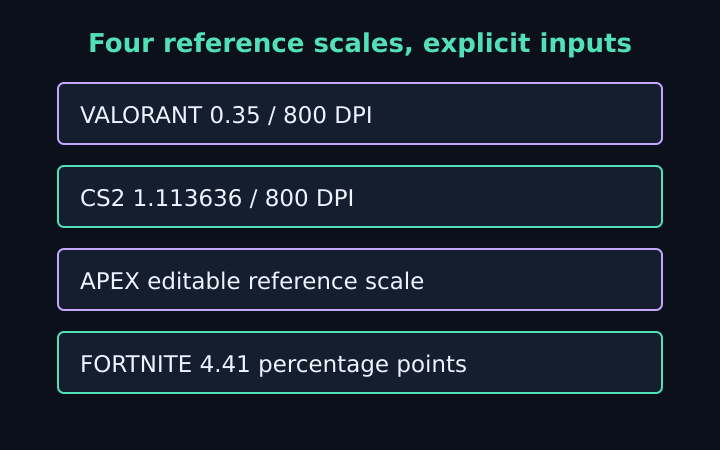
VALORANT to CS2 Sensitivity: Worked Examples
Follow five explicit mouse-setting examples for CS2, VALORANT, Apex and Fortnite, with DPI changes, percentage units and physical-turn checks.
Read the note01 · SET THE SOURCE

02 · DEFINE THE TARGET
03 · VERIFY THE TURN
Local calculations
No account needed
Use the sensitivity converter to translate a mouse setting with DPI and angular assumptions in view. Read cm/360, keep eDPI in context and copy a note you can verify.
Independent tool · Reference presets · Not affiliated with game publishers
The example uses VALORANT 0.35 at 800 DPI, reference coefficient 0.07, and CS2 at 800 DPI with reference coefficient 0.022. Replace the assumptions with your verified setup.
Enter sensitivity, DPI and an explicit angular coefficient. The preset is a reference to inspect, not a certified default.
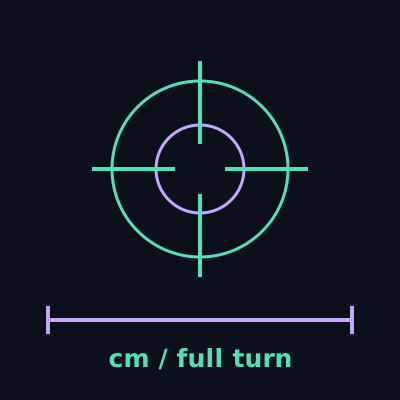
See centimetres and inches for a full horizontal turn, plus 180-degree and 90-degree checkpoints.
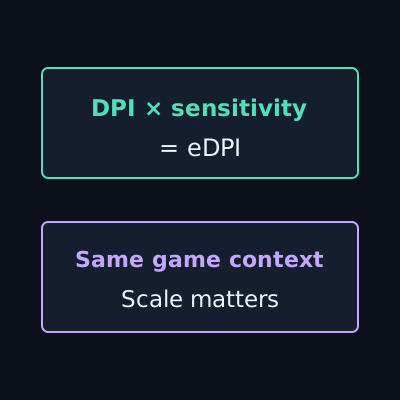
Show the DPI-sensitivity product using the stated notation. Different game scales need their coefficients too.
Save source, target, coefficients, physical travel and scope exclusions together, with manual-copy fallback.
Use the active source DPI and sensitivity. Review coefficient units and percentage-point notation.
Enter target DPI and coefficient. Read the resulting sensitivity and physical-turn distance.
Check the value accepted by the game and a consistent horizontal hip-fire turn. Retain rounding and assumptions.
Inspect a VALORANT to CS2 sensitivity converter scenario, or select Apex and Fortnite references.
Preserve physical turn travel while changing target DPI, under the same verified angular scale.
Enter a chosen physical full-turn distance and derive implied settings. The distance is your input, not a recommendation.
The physical mouse travel for a horizontal 360-degree hip-fire turn under linear input, using the entered DPI, sensitivity and angular coefficients.
No. The presets are editable reference assumptions. Check your current game and configuration, then verify a physical horizontal turn.
Different angular scales and sensitivity conventions can make equal eDPI represent different turn distances. Read eDPI within its game context.
No. Calculation fields remain in browser memory without uploads, calculation cookies or persistent history. Copy uses the device clipboard.

Follow five explicit mouse-setting examples for CS2, VALORANT, Apex and Fortnite, with DPI changes, percentage units and physical-turn checks.
Read the note
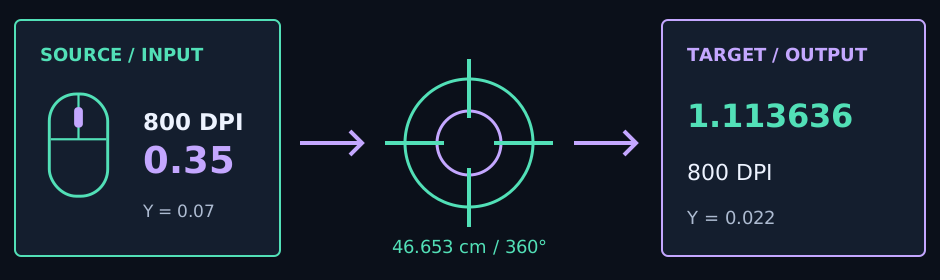
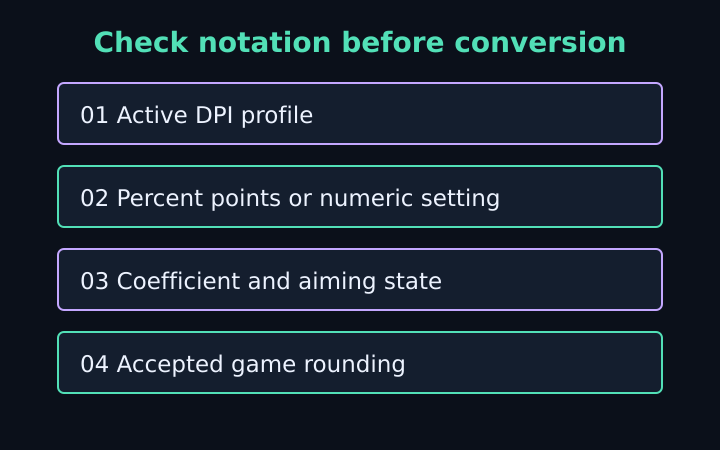
Check DPI profiles, percentage notation, coefficients, aiming states and game rounding before trusting a mouse-sensitivity match.
Read the note
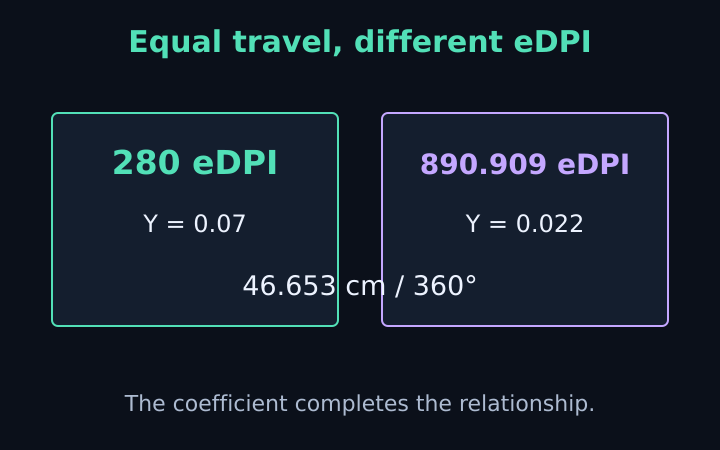
Compare eDPI, raw sensitivity and physical turn distance. Learn why equal eDPI across games does not guarantee a matched mouse response.
Read the noteKeep your DPI, sensitivity, coefficient and aiming state together. Verify the physical response after conversion.